The Triumph of the Optimists
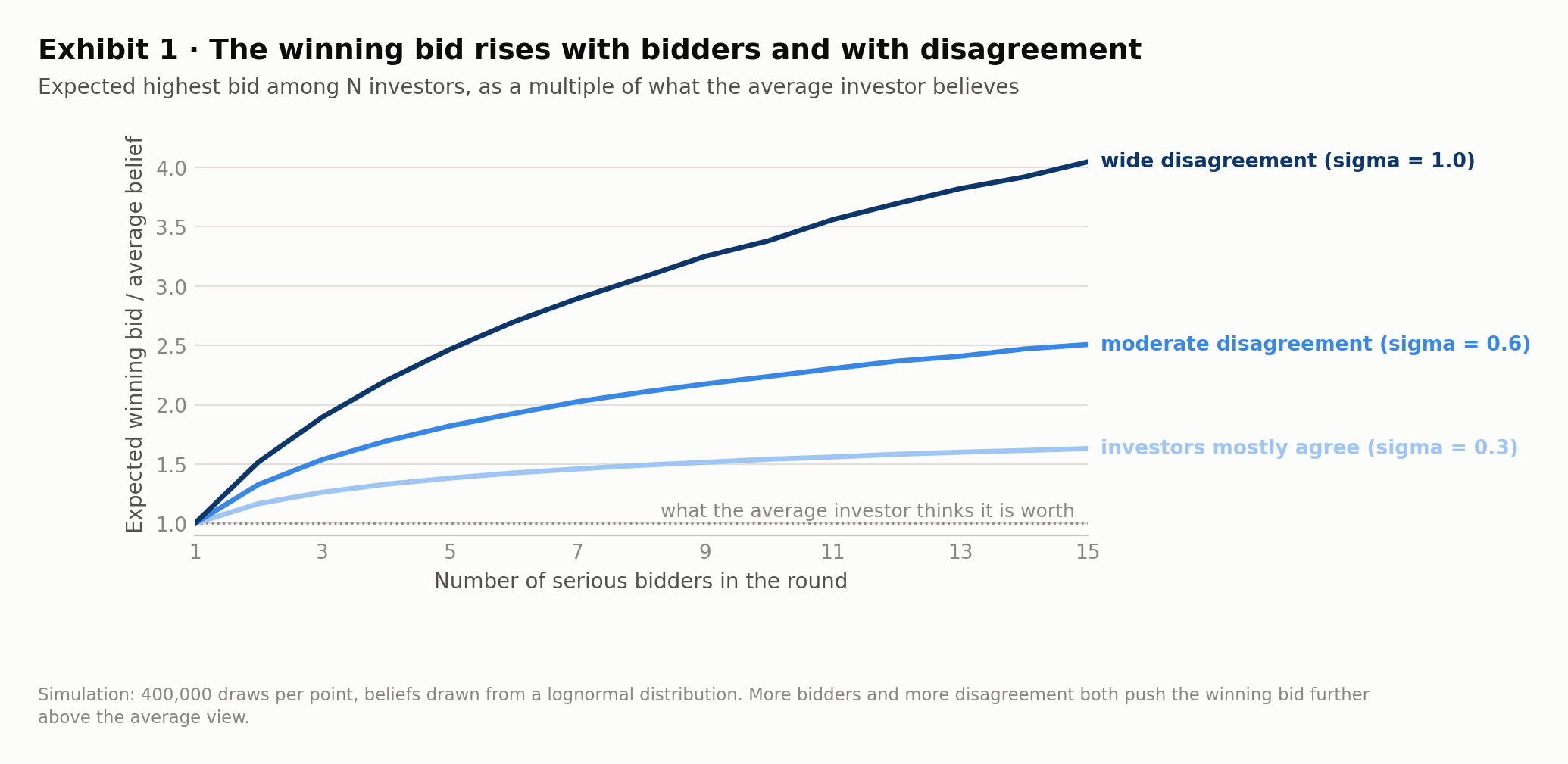
Why private AI rounds price at the most optimistic bid in the room, why the returns underneath look like venture, and why owning the field beats picking the name.
Forward views · market commentary · technical
Stay informed with our latest perspectives on late-stage technology investing, market trends, and systematic analysis of the evolving landscape.
Why private AI rounds price at the most optimistic bid in the room, why the returns underneath look like venture, and why owning the field beats picking the name.

If "wrapper" is too blunt to be useful, what should replace it? A map. Part three completes the series with the six dimensions that actually matter for evaluating AI application-layer companies, the five archetypes that emerge once you map them, and why archetypes are not destinies.

NVIDIA does not fabricate its own chips. It outsources the most capital-intensive layer in its stack to TSMC, and still captures most of the economic surplus. Part two of a three-part series on what makes some wrappers durable, and what compounds above the substrate.
Why private AI rounds price at the most optimistic bid in the room, why the returns underneath look like venture, and why owning the field beats picking the name.
If "wrapper" is too blunt to be useful, what should replace it? A map. Part three completes the series with the six dimensions that actually matter for evaluating AI application-layer companies, the five archetypes that emerge once you map them, and why archetypes are not destinies.
NVIDIA does not fabricate its own chips. It outsources the most capital-intensive layer in its stack to TSMC, and still captures most of the economic surplus. Part two of a three-part series on what makes some wrappers durable, and what compounds above the substrate.
"It is just a wrapper" has become too blunt a phrase to do the work investors are asking it to do. It mistakes naming for analyzing. Part one of a three-part series replaces the lazy dismissal with a better vocabulary for understanding the AI application layer.

AI collapses execution as a moat, so mediocre ideas die faster than ever. Novel human knowledge, trust networks, and the slow accumulation of character emerge as the highest-leverage assets in the economy.

Few financial innovations have created as much lasting wealth for ordinary investors as indexing. But the mechanics that make indexing work in public markets simply don't exist in private markets, at least not today.

As private technology companies stay private longer and grow larger than any time in history, having exposure to these companies is rapidly transitioning from a nice-to-have to a necessity.

Public markets have historically been the arena where companies grew from promising upstarts into industry titans. Today's IPO isn't a beginning, it's an exit.

Private market investors obsess over a single metric when evaluating secondary opportunities: the discount or premium to the last funding round. This approach is fundamentally flawed.

Today's private market has transformed into something the original architects of venture capital might not recognize. The primary venture market prioritizes paper valuations over sustainable growth.

Imagine walking into your office in 2030. The silence hits you first. Gone are the frenetic phone calls, the furious typing, the low hum of humans wrestling with spreadsheets and slides.

Renaissance Capital's 2025 IPO outlook projects 155-195 IPOs raising $40-55B in proceeds next year. More striking than the proceeds is the sheer scale of companies preparing to list.

An analysis of the venture capital landscape in 2023, examining the aftermath of the 'Everything Bubble' and its impact on startups, investments, and market dynamics.

Despite current economic pressures, the technology & innovation supercycle narrative remains unchanged, and the current conditions create a unique opportunity for venture capital funds to earn once-in-a-decade returns.